
Serving Canadian associations since 2001
Strategic planning is one of the most powerful things a nonprofit or membership organization can do — and one of the most misunderstood. Done well, it aligns your board, energizes your members, and creates a clear path to long-term sustainability. Done poorly, it produces a beautiful binder that collects dust on a shelf.
This guide cuts through the confusion and gives you a practical, honest look at what strategic planning really involves — and how to make it work for your organization.
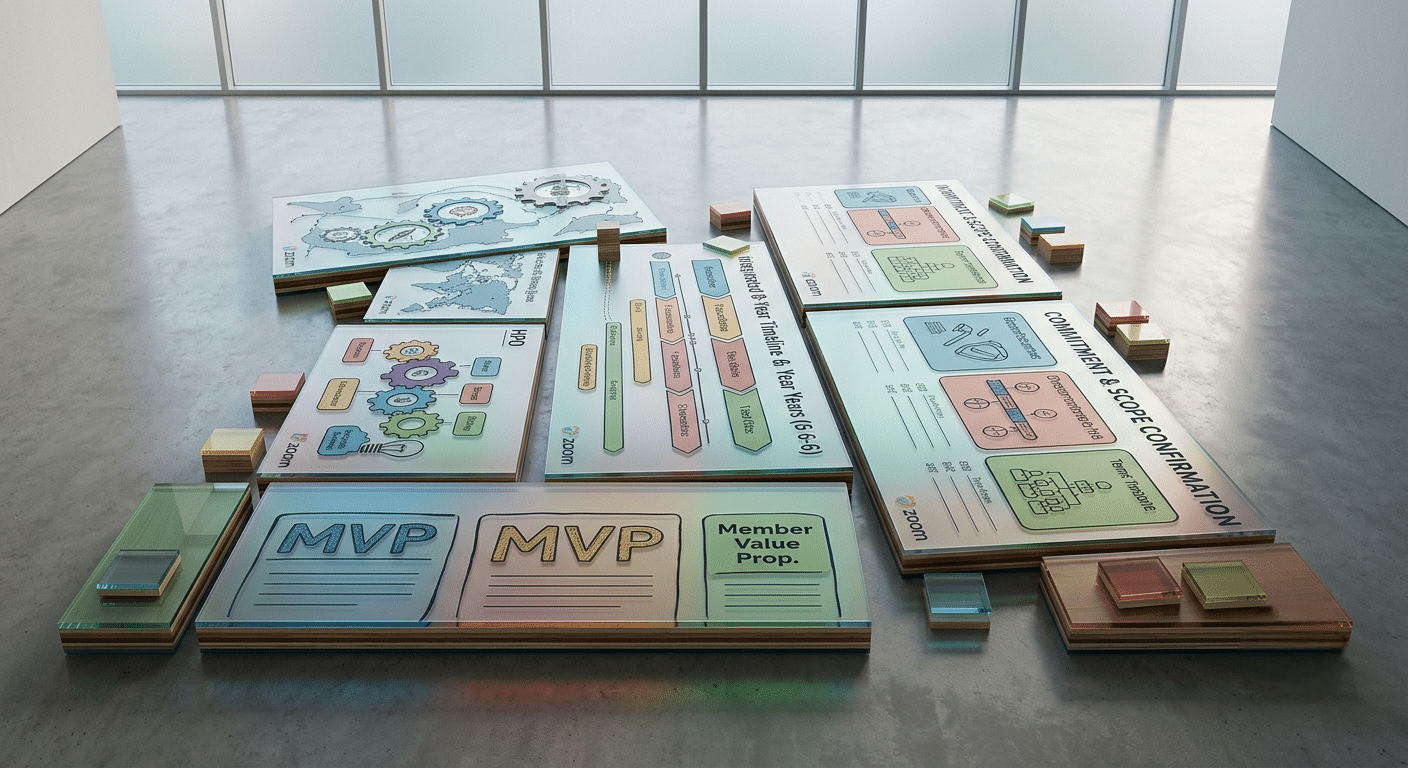
Strategic planning is the process of defining where your organization is going, why it matters, and how you’re going to get there. It’s not a to-do list. It’s not a budget exercise. And it’s definitely not a one-time event.
For membership organizations specifically, strategic planning must also address a fourth question: What do our members need from us? Without that lens, even the most polished plan will miss the mark.
A clear and honest look at your opportunities, threats, and operating reality.
Specific tactics and initiatives that will move you from your current state to your desired future state.
An implementation plan with milestones, dates, accountability, and required resources.
Metrics, accountability, and a clear process to monitor progress.
Membership organizations serve a community, not just an organization. Zzeem’s High Performance Membership Organization (HPO™) framework helps associations create practical, actionable strategies built for high performance.

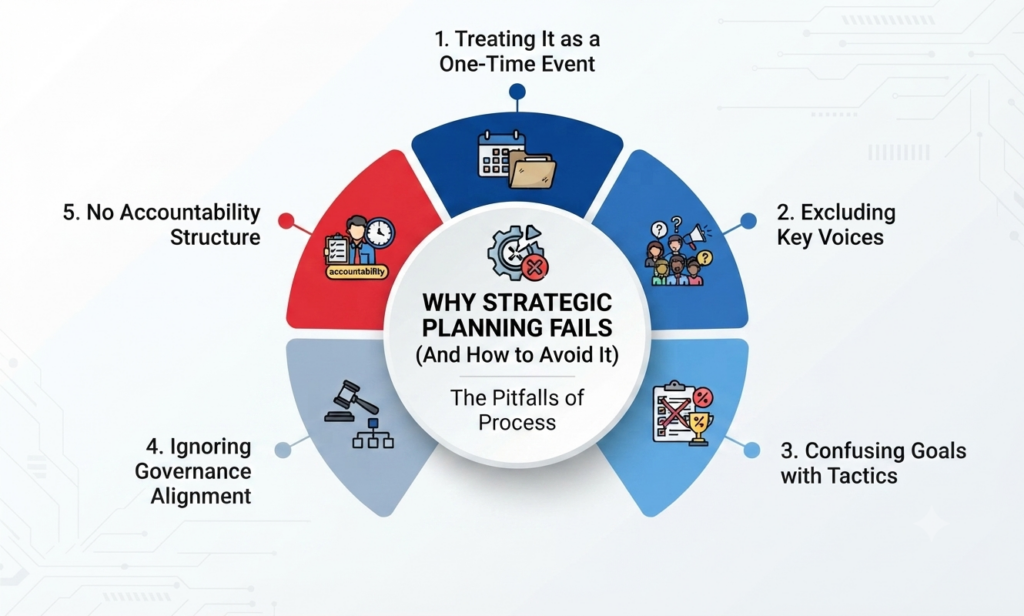
A plan created every three to five years and then filed away isn’t a strategy — it’s a snapshot. Effective strategic planning is an ongoing cycle of setting direction, executing, measuring, and adjusting.

Boards that plan in isolation consistently produce strategies that don’t resonate with staff, members, or stakeholders. Inclusive planning creates buy-in and surfaces insights that leadership alone can’t see.

“Launch a new website” is a tactic. “Increase member engagement by 30% over two years” is a goal. Many organizations build lists of activities without first defining the outcomes they’re working toward.

Strategic planning and governance go hand in hand. If your board doesn’t have clarity on its own roles and responsibilities, it’s nearly impossible to build a plan that gets executed effectively.
A plan without owners and timelines is a wish list. Every strategic priority needs a champion, a timeline, and a way to measure progress. An implementation plan is essential; otherwise, the strategy will sit around without any forward momentum.
Most nonprofit strategic plans don’t fail because of bad ideas. They fail because of how the process is run. Here are the most common pitfalls:
Leadership Support Program

Before you plan, get clear on your vision, mission, and values. These aren’t just words on a website — they’re the filter through which every strategic decision should pass. If your current statements feel vague or outdated, this is the moment to revisit them.

Conduct an honest environmental scan. This includes:
Tools like a SWOT analysis or a structured organizational assessment can surface issues that are easy to overlook when you’re close to the work.

Involve board members, staff, association members, and key partners in the process. This can include surveys, focus groups, or facilitated conversations. The goal isn’t consensus on everything — it’s ensuring the right perspectives inform the plan. Use a facilitator who can act as an independent third party.

Based on your assessment, identify three to five strategic priorities for the planning horizon (typically three years). These should represent the most important areas of focus — not everything you want to do, but what matters most.

For each priority, define:

A plan that lives in a document isn’t a plan — it’s an intention. Share it with your full membership, build it into board meeting agendas, and connect staff work plans to strategic priorities. We have had clients build the strategic plan into their monthly or quarterly management report. State the strategic objective; state the tasks undertaken to deliver on this; state the outcomes of the tasks; state what the next step is.

Build in regular check-ins — quarterly at minimum. The environment changes, resources shift, and priorities evolve. A living strategic plan is one that gets updated, not just reviewed.
Volunteer boards bring enormous value — lived experience, sector credibility, community connection. But they also face real constraints: limited time, varying levels of organizational knowledge, and frequent turnover.
Effective strategic planning with volunteer boards means:
Keeping the process focused and time-efficient — respect volunteers’ time by running a structured, well-facilitated process
Providing context before asking for input — board members can’t make good strategic decisions without good information
Separating governance from operations — the board sets direction; staff and management execute
Building continuity — document decisions and rationale so that new board members can step in without losing momentum
One of the most valuable things you can do before a strategic planning process is conduct a structured organizational assessment. This gives you an evidence-based picture of where your organization stands across key dimensions — governance, financial health, member value, revenue diversification, and more.
An assessment removes the guesswork and helps boards have honest, productive conversations about priorities. It also creates a baseline against which you can measure progress over time.
It doesn’t need to be a formal SWOT document, but it does need to be done. Without knowing where you are, it doesn’t matter where you are going. As Alice learns from the Cheshire Cat:
“Would you tell me, please, which way I ought to go from here?”
“That depends a good deal on where you want to get to,” said the Cat.
“I don’t much care where–” said Alice.
“Then it doesn’t matter which way you go,” said the Cat.
“-so long as I get SOMEWHERE,” Alice added as an explanation.
“Oh, you’re sure to do that,” said the Cat, “if you only walk long enough.”
Strategic planning isn’t just about solving problems — it’s about building toward something. High-performing membership organizations share several characteristics:
These don’t happen by accident. They’re the result of intentional planning, consistent execution, and a willingness to honestly assess and improve.
If your organization hasn’t done a strategic planning process recently — or if your last plan never quite got off the ground — now is a good time to start.
You don’t need a perfect process. You need an honest one.
Start with the right questions, involve the right people, and commit to turning the plan into action. The organizations that do this consistently are the ones that grow, adapt, and create lasting impact for their members and communities.
Zzeem works with membership organizations across Canada to facilitate strategic planning, conduct organizational assessments, and build the governance and operational foundations that high-performing associations need. Learn more at zzeem.com.